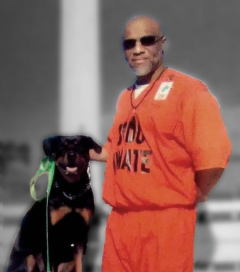
Jawanza, Sundiata (Darvin Allen)
Contact Information
Prison Address
Darvin Allen 00233800
Kirkland Correctional Institution, 4344 Broad River Rd.
Columbia, SC 29210
United StatesSundiata Jawanza is a New Afrikan Revolutionary Nationalist, human rights advocate, abolitionist organizer, jailhouse lawyer, and one of the many torch bearers carrying forward the revolutionary legacy and political vision of George L. Jackson. The State of South Carolina has imprisoned him since 1995. By his own account, he entered as a young man, a "lumpen proletariat" convicted of offenses committed in his youth. He has expressed remorse for those acts and has spent more than three decades pursuing self-development, political education, service, and the empowerment of others.
What the State did not anticipate was what happens when a human being is confined for decades in a system built on dehumanization: he began to study. He read George Jackson and other New Afrikan revolutionary thinkers. He join a New Afrikan cadre of strategic thinkers. He studied law. He came to understand that his individual circumstances were not isolated, but connected to a larger system of racialized mass incarceration, political repression, and the denial of basic human rights. And he began to organize.
The State did not imprison a political prisoner in 1995. Through decades of confinement, political education, self development, and retaliation, it helped create the organizer he is today.
Building a Progressive Legal Network:
Sundiata became a founding force behind a progressive legal and organizing network designed to bridge the walls of the prison system. His model recognizes the importance of building both above ground and below ground networks. Attorneys, legal advocates, researchers, organizers, and community supporters work outside the prison walls while incarcerated people develop legal knowledge, self advocacy, political education, and collective power inside.
For Sundiata, legal advocacy is not simply about individual cases. It is also about developing people who understand the systems governing their lives and who can organize themselves and their communities to challenge those systems.
Through this work, he has helped educate incarcerated people about law, human rights, self-advocacy, prison conditions, prison slavery, and mass incarceration. He has worked to create relationships connecting incarcerated organizers with attorneys, legal advocates, researchers, and community networks beyond the prison walls. His work reflects a broader principle: those inside and those outside must be able to communicate, educate one another, and build organized community power.
A Torch Bearer of George L. Jackson:
Sundiata's political development is deeply rooted in the legacy of George L. Jackson.
He is one of the many torch bearers who have carried Jackson's questions about political education, self-determination, collective responsibility, revolutionary consciousness, and resistance to oppressive institutions into another generation. But carrying a torch does not mean simply repeating the past. It means taking the lessons of those who came before and applying them to the conditions of the present.
For Sundiata, that has meant turning decades of confinement into education, legal work, community service, organizing, and the development of collective power among incarcerated people and their communities.
Service Behind the Walls:
Sundiata's organizing extends beyond legal advocacy. Inside, he is a Certified Peer Support Specialist (CPSS) and crisis interventionist, providing emotional support to incarcerated people experiencing crisis, trauma, depression, and hopelessness.
He facilitates therapeutic programs five days a week in a classroom provided by prison authorities. He is also an Imam, providing spiritual guidance, pastoral care, and principled leadership to the Muslim community at Kirkland Correctional Institution. These responsibilities reflect a consistent element of Sundiata's work: developing people, helping others survive the conditions of confinement, and encouraging incarcerated people to recognize their own capacity for growth, leadership, and collective action.
Retaliation and Continued Confinement:
Sundiata's supporters maintain that his organizing activities have brought additional scrutiny and retaliation from prison authorities. During the first part of his sentence, Sundiata spent years in isolation as a direct result of his political stances and organizing activities. Prison officials have reportedly told Sundiata directly that if he continued organizing, he would never leave prison alive.
What the State did not anticipate was what happens when a human being is confined for decades in a system built on dehumanization: he began to study. He read George Jackson and other New Afrikan revolutionary thinkers. He join a New Afrikan cadre of strategic thinkers. He studied law. He came to understand that his individual circumstances were not isolated, but connected to a larger system of racialized mass incarceration, political repression, and the denial of basic human rights. And he began to organize.
The State did not imprison a political prisoner in 1995. Through decades of confinement, political education, self development, and retaliation, it helped create the organizer he is today.
Building a Progressive Legal Network:
Sundiata became a founding force behind a progressive legal and organizing network designed to bridge the walls of the prison system. His model recognizes the importance of building both above ground and below ground networks. Attorneys, legal advocates, researchers, organizers, and community supporters work outside the prison walls while incarcerated people develop legal knowledge, self advocacy, political education, and collective power inside.
For Sundiata, legal advocacy is not simply about individual cases. It is also about developing people who understand the systems governing their lives and who can organize themselves and their communities to challenge those systems.
Through this work, he has helped educate incarcerated people about law, human rights, self-advocacy, prison conditions, prison slavery, and mass incarceration. He has worked to create relationships connecting incarcerated organizers with attorneys, legal advocates, researchers, and community networks beyond the prison walls. His work reflects a broader principle: those inside and those outside must be able to communicate, educate one another, and build organized community power.
A Torch Bearer of George L. Jackson:
Sundiata's political development is deeply rooted in the legacy of George L. Jackson.
He is one of the many torch bearers who have carried Jackson's questions about political education, self-determination, collective responsibility, revolutionary consciousness, and resistance to oppressive institutions into another generation. But carrying a torch does not mean simply repeating the past. It means taking the lessons of those who came before and applying them to the conditions of the present.
For Sundiata, that has meant turning decades of confinement into education, legal work, community service, organizing, and the development of collective power among incarcerated people and their communities.
Service Behind the Walls:
Sundiata's organizing extends beyond legal advocacy. Inside, he is a Certified Peer Support Specialist (CPSS) and crisis interventionist, providing emotional support to incarcerated people experiencing crisis, trauma, depression, and hopelessness.
He facilitates therapeutic programs five days a week in a classroom provided by prison authorities. He is also an Imam, providing spiritual guidance, pastoral care, and principled leadership to the Muslim community at Kirkland Correctional Institution. These responsibilities reflect a consistent element of Sundiata's work: developing people, helping others survive the conditions of confinement, and encouraging incarcerated people to recognize their own capacity for growth, leadership, and collective action.
Retaliation and Continued Confinement:
Sundiata's supporters maintain that his organizing activities have brought additional scrutiny and retaliation from prison authorities. During the first part of his sentence, Sundiata spent years in isolation as a direct result of his political stances and organizing activities. Prison officials have reportedly told Sundiata directly that if he continued organizing, he would never leave prison alive.
Confidential informant allegations (which supporters maintain are unsupported by evidence) have been used to characterize him as a leader of an alleged "Black paramilitary organization" and to justify parole denials and strict custody classification.
Over the past year, prison officials blocked his general mail, classifying correspondence as a "security threat." The suppression continued for more than a year and was only recently resolved after Sundiata filed a formal complaint. His general mail is now being delivered. His supporters argue that these actions demonstrate that his continued imprisonment cannot be understood solely through the conviction that brought him into prison in 1995.
They contend that his political development, organizing, advocacy, and leadership have become factors in how he is treated and in the barriers placed before him.
Supporters therefore regard Sundiata Jawanza as a political prisoner because they believe his continued confinement reflects not only his original conviction but also retaliation connected to his political beliefs, human rights advocacy, organizing, and leadership behind the walls.
How You Can Help Bring Sundiata Home:
The campaign to free Sundiata Jawanza recognizes that lasting change requires organized public pressure.
Supporters are working to build a broad movement rooted in community organizing, public education, media outreach, legal advocacy, fundraising, and solidarity.
Sundiata encourages people and organizers to pick up his campaign and organize.
You do not need permission from a freedom committee to organize around his name or organize for his freedom.
If you believe Sundiata should come home, organize.
Write to Sundiata:
His general mail is now being delivered after more than a year of suppression.
If you wrote before and never received a reply, your letter may never have reached him. Sundiata has promised to respond to every letter he receives.
Contact South Carolina Decision Makers
Call and write elected officials, the South Carolina Department of Corrections, and the parole board.
Tell them that Sundiata is ready to return home and should be welcomed back into the community.
Amplify His Story:
Share information about Sundiata's case through traditional and social media.
Help ensure that his name, his history, his organizing, and his work reach a wider public.
Organize in Your Community:
Host educational events, film screenings, panel discussions, teach ins, or community meetings addressing political prisoners, mass incarceration, prison abolition, incarcerated organizing, and human rights.
Bring information about Sundiata's case to your mosque, church, union, school, campus, neighborhood organization, or community group.
Build relationships.
Educate people.
Create community networks.
Over the past year, prison officials blocked his general mail, classifying correspondence as a "security threat." The suppression continued for more than a year and was only recently resolved after Sundiata filed a formal complaint. His general mail is now being delivered. His supporters argue that these actions demonstrate that his continued imprisonment cannot be understood solely through the conviction that brought him into prison in 1995.
They contend that his political development, organizing, advocacy, and leadership have become factors in how he is treated and in the barriers placed before him.
Supporters therefore regard Sundiata Jawanza as a political prisoner because they believe his continued confinement reflects not only his original conviction but also retaliation connected to his political beliefs, human rights advocacy, organizing, and leadership behind the walls.
How You Can Help Bring Sundiata Home:
The campaign to free Sundiata Jawanza recognizes that lasting change requires organized public pressure.
Supporters are working to build a broad movement rooted in community organizing, public education, media outreach, legal advocacy, fundraising, and solidarity.
Sundiata encourages people and organizers to pick up his campaign and organize.
You do not need permission from a freedom committee to organize around his name or organize for his freedom.
If you believe Sundiata should come home, organize.
Write to Sundiata:
His general mail is now being delivered after more than a year of suppression.
If you wrote before and never received a reply, your letter may never have reached him. Sundiata has promised to respond to every letter he receives.
Contact South Carolina Decision Makers
Call and write elected officials, the South Carolina Department of Corrections, and the parole board.
Tell them that Sundiata is ready to return home and should be welcomed back into the community.
Amplify His Story:
Share information about Sundiata's case through traditional and social media.
Help ensure that his name, his history, his organizing, and his work reach a wider public.
Organize in Your Community:
Host educational events, film screenings, panel discussions, teach ins, or community meetings addressing political prisoners, mass incarceration, prison abolition, incarcerated organizing, and human rights.
Bring information about Sundiata's case to your mosque, church, union, school, campus, neighborhood organization, or community group.
Build relationships.
Educate people.
Create community networks.
Support the Fundraising Campaign:
Legal and campaign expenses require sustained resources.
Organize or contribute to legitimate fundraising efforts supporting Sundiata's freedom campaign.
Unchain Sundiata Jawanza — Fundraiser: https://share.google/hIgsKKaZ1CSsglcJ0
Join Solidarity Actions:
Participate in or organize public events calling for Sundiata's freedom and an end to political retaliation against incarcerated organizers.
The movement for Sundiata's freedom should not be limited to one organization, one committee, or one group of people.
It belongs to everyone who believes that people can transform themselves, that incarcerated people possess the capacity to organize and lead, and that political education and community power can challenge systems of oppression.
Get Involved:
To volunteer, organize in your area, or request Unchain Sundiata Jawanza campaign materials:
Jailhouselawyersspeak@protonmail.com
freejawanza@protonmail.com
Sundiata's work demonstrates what can emerge when confinement is transformed into education, service, leadership, and collective responsibility. His decades behind the walls have not prevented him from building relationships, developing people, and contributing to a broader movement for justice and human rights.
Now it is our responsibility to build upon that work, strengthen the connections between those inside and those outside, and organize the movement necessary to bring Sundiata home. Free All Political Prisoners! Abolition!
Legal and campaign expenses require sustained resources.
Organize or contribute to legitimate fundraising efforts supporting Sundiata's freedom campaign.
Unchain Sundiata Jawanza — Fundraiser: https://share.google/hIgsKKaZ1CSsglcJ0
Join Solidarity Actions:
Participate in or organize public events calling for Sundiata's freedom and an end to political retaliation against incarcerated organizers.
The movement for Sundiata's freedom should not be limited to one organization, one committee, or one group of people.
It belongs to everyone who believes that people can transform themselves, that incarcerated people possess the capacity to organize and lead, and that political education and community power can challenge systems of oppression.
Get Involved:
To volunteer, organize in your area, or request Unchain Sundiata Jawanza campaign materials:
Jailhouselawyersspeak@protonmail.com
freejawanza@protonmail.com
Sundiata's work demonstrates what can emerge when confinement is transformed into education, service, leadership, and collective responsibility. His decades behind the walls have not prevented him from building relationships, developing people, and contributing to a broader movement for justice and human rights.
Now it is our responsibility to build upon that work, strengthen the connections between those inside and those outside, and organize the movement necessary to bring Sundiata home. Free All Political Prisoners! Abolition!
Jailhouse Lawyers Speak: Legally empowering people in prisons and advocating for prisoners human rights.
Visit us at www.jailhouselawyersspeak.com
Politicized Prisoner